Build Sports Venue Email List Sign-Ups Into Every Booking, Rego and Visit
Your bookings and registrations already collect email addresses. Here's how to turn them into a consented, segmented list you can use to fill camps, comps and quiet court slots.
On this page
It's the Saturday changeover and a parent at the desk asks when the summer holiday camps open. You tell her, she says thanks, and you realise there are a couple of hundred families who played this term who will never hear that answer. The fix is to build sports venue email list sign-ups into the places people already give you their details: the booking checkout, the registration form and the front desk.
This guide walks through each collection point, how to ask so people say yes, how to split the list so every email is relevant, and a worked example of what that's worth on a quiet weeknight.
Why your customer records aren't an email list yet
Most venues already hold hundreds of email addresses. Every casual booking, every camp rego, every team entry collected one. But a pile of addresses isn't a list you can market to.
Two things are usually missing.
Consent. In Australia, commercial emails and SMS fall under the Spam Act. Broadly, you need consent, you need to identify yourself, and every message needs a working unsubscribe. A booking confirmation is a different thing from a camp promotion. Read ACMA's guidance on the Spam Act and confirm how it applies to your business before you send anything promotional. This is a pointer, not legal advice.
Context. An address on its own tells you nothing. Is this a Thursday-night social netballer, a parent of an under-10 at Saturday coaching, or someone who booked one birthday party in 2024? Without that context, you end up sending everyone everything, and people stop opening.
So the job isn't really collecting addresses. It's collecting addresses with a clear yes and a reason they came in the door.
Collection point one: the online booking checkout
The checkout is your highest-volume sign-up point. People are already typing their name and email, and they're in a good mood because they've just locked in a court.
What works here:
- One unticked opt-in line, written plainly. "Send me occasional emails about open games, comps and spare court time." Specific beats vague. "Subscribe to our newsletter" gets ignored; "tell me when a court opens up at short notice" gets ticked.
- Ask once, at the end. Don't put it before payment where it adds friction. Put it next to the confirm button or on the confirmation screen.
- Capture the booking type with the address. A casual court hire, an open game and a party booking are three different people. If your system records what they booked, your segments build themselves.
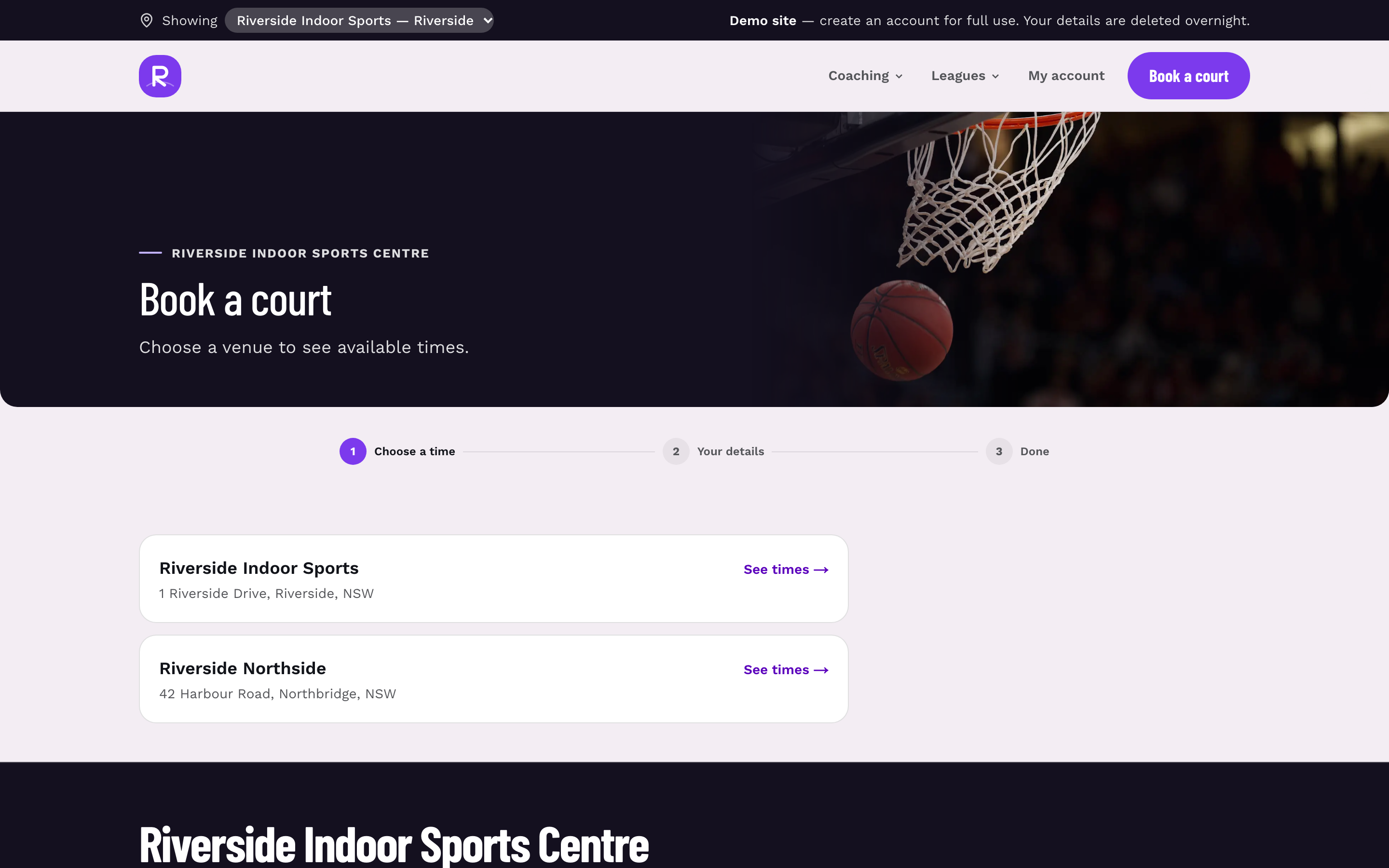
If you're still taking bookings over the phone, every one of those calls is a sign-up you're not getting. Moving casual and recurring hire to online court and field booking is the single biggest step most venues can take to grow a usable list.
Collection point two: program, camp and comp registrations
Registrations are the richest data you'll ever collect. You know the child's age, the program, the term, sometimes siblings. For comps, you know the team, the division and the night they play.
Use it:
- Separate the opt-in from the terms and conditions. Parents tick T&Cs because they have to. Marketing consent should be its own line so it's a real yes.
- Name the benefit. "Get first notice when holiday camps open" is a reason to tick. Camps that sell out make this an easy sell, and early notice is a genuine perk.
- For comps, ask every player, not just the captain. More on that below.
Keep the form short. Every extra field costs completions, so only ask for what you'll actually use. If your program, camp and coaching registration already captures age group and program, you don't need to ask again in a survey later.
Once families are on the list, the hard part is writing messages they read. Our guide to sports parent emails and SMS that get read covers tone, timing and length.
Collection point three: on-site, at the desk and courtside
This is where most lists leak. A setup we see a lot: a social comp with forty teams, and the venue only has contact details for forty captains. The captain books, pays, and forwards the fixture to a group chat. The other 300-odd players walk through the door every week and the venue has no way to reach any of them.
When the captain moves interstate or the team folds, those players vanish with them. Some would happily have joined another team or a mixed comp if anyone had asked.
Fixes that work on the floor:
- Give non-captains a reason to sign up. Ladder updates, wet-weather and heat calls, and a fill-in list for teams short a player are all things individual players want. "Join the fill-in list" is one of the most effective sign-ups we see, because it gets them a game.
- A QR code at the desk and courtside that goes straight to a short sign-up page. Name, email, what they play, opt-in. Four fields, done before the next whistle.
- Train desk staff to ask one question. When someone asks about camps or a new comp, the answer is "I'll pop you on the list so you hear first." Have a tablet or the staff app ready rather than a clipboard you'll never type up.
- Open games and come-and-try nights. Make signing up part of checking in. If they had fun, they want to know when the next one runs.
Paper sign-up sheets are a last resort. Handwriting is hard to read, nobody types them up on time, and there's no record of consent.
How to build sports venue email list segments you'll actually use
A list of 1,000 people who all get the same email is worse than three lists of 300 who each get something relevant. Segment by what people came for, not by demographics you've guessed.
| Segment | Where they signed up | What they want to hear | Example email |
|---|---|---|---|
| Casual court hirers | Booking checkout | Spare court time, recurring slots | "Two Tuesday 8pm courts free this term" |
| Social comp players | Comp rego, fill-in list | New seasons, fill-in requests, finals | "Summer mixed comp rego opens Monday" |
| Program and camp parents | Program rego | Camps, next term, trials | "Winter camp spots open to past families first" |
| Party bookers | Party booking | Next birthday, sibling parties | "Booking another party this year?" |
| Open game regulars | Open game check-in | New sessions, format changes | "New Sunday morning open futsal" |
People will sit in more than one segment. That's fine. The rule is simple: before you hit send, ask whether every person on this segment would be glad to get this message. If not, narrow it.
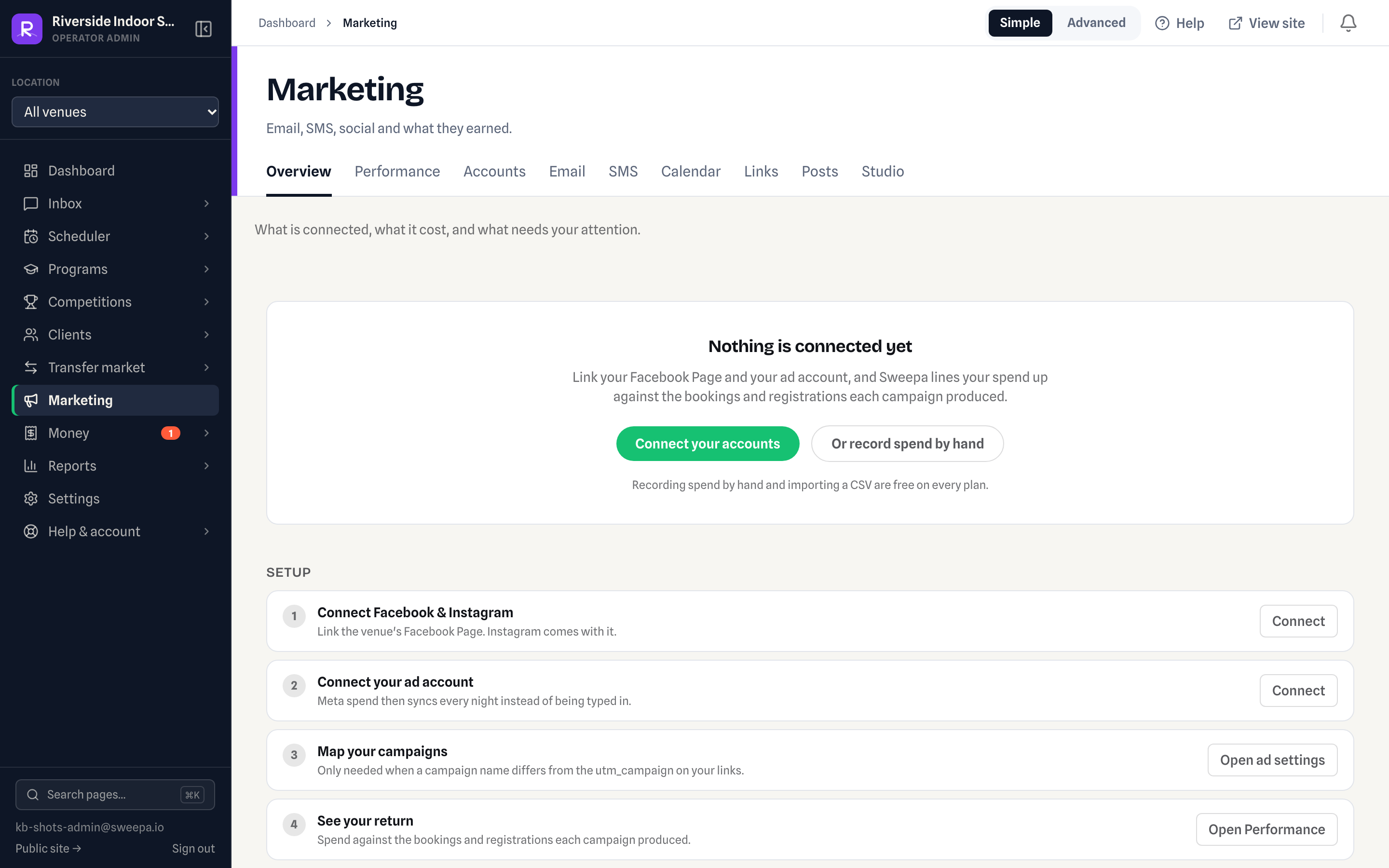
This is the part Sweepa does for you. Every booking and registration lands in one CRM with the booking type and program attached, so you can email or SMS a segment without exporting spreadsheets between tools.
Worked example: filling a quiet Tuesday slot
Here's what a segmented list is worth in plain dollars. The assumptions are made up for the example; swap in your own.
Say you have a court that hires at $60 an hour, and the Tuesday 8pm slot sits empty for a 10-week term. You have 150 people on your list who've opted in and previously booked an evening court.
| Scenario | Weeks filled | Revenue from the slot |
|---|---|---|
| No email, slot stays empty | 0 of 10 | $0 |
| One email, fills half the weeks | 5 of 10 | $300 |
| Converts to a recurring booking | 10 of 10 | $600 |
The email costs you ten minutes to write. If it lands one regular group, that's a term of hire you'd otherwise have written off. Converting that group into a weekly booking is its own skill; our guide to filling off-peak court time with open sessions and social play picks up from here.
The same maths applies to camps. Every spot filled from your own list is a spot you didn't have to pay for in ads or chase through local Facebook groups.
Mistakes that stop people opening your emails
- Sending everything to everyone. The fastest way to train people to ignore you.
- Only emailing when you want money. Mix in the useful stuff: draw released, wet-weather call, finals times, a new open game.
- Vague subject lines. "Venue news, March" loses to "Winter camp dates are out."
- No unsubscribe, or a hidden one. It's a legal requirement and a trust signal. People who leave weren't going to book anyway.
- Waiting too long after sign-up. Send a short welcome while they still remember ticking the box.
- Buying or borrowing a list. Don't. It breaks consent and the addresses don't know who you are.
Your Monday checklist
- Check your booking and registration forms each have a separate, plainly worded marketing opt-in.
- Rewrite the opt-in text to name a specific benefit: first notice of camps, spare court time, fill-in games.
- Print a QR code sign-up for the desk and courtside, four fields maximum.
- Brief desk staff on the one-line ask: "I'll pop you on the list so you hear first."
- Start a fill-in player list for your social comps.
- Set up your five segments based on what people booked or registered for.
- Pick your quietest recurring slot and send one email to the right segment this week.
If you want a launch sequence for the next big send, our four-week summer holiday camp marketing plan uses exactly this list.
FAQ
Can I email everyone who has ever booked at my venue?
Not automatically for promotional messages. Australia's Spam Act generally requires consent for commercial emails, and a past booking doesn't always count as consent to marketing. Check ACMA's guidance and confirm how it applies to your business before sending promotions to past customers.
What's the best place to collect email sign-ups at a sports venue?
The online booking checkout and registration forms collect the most, because people are already entering their details. On-site sign-ups at the desk and courtside fill the gap for players who never book directly, like non-captain team members. Using all three gives you the fullest list.
How do I get players who aren't team captains onto my list?
Give them something individually useful, such as ladder updates, wet-weather calls or a fill-in list for short teams. Put a QR code sign-up courtside and at the desk so they can join in under a minute. A fill-in list works especially well because it gets them more games.
How often should a venue email its list?
Send when you have something relevant to a specific segment, rather than on a fixed schedule to everyone. For most venues that means seasonal pushes around camps and comp rego, plus useful operational updates in between. If a message isn't relevant to most of a segment, narrow the audience or skip it.
Should I use email or SMS for venue marketing?
Email suits longer content like camp details, comp launches and term programs. SMS suits short, time-sensitive messages such as a court opening up tonight or a fill-in needed. Both need consent and an opt-out for promotional use.